
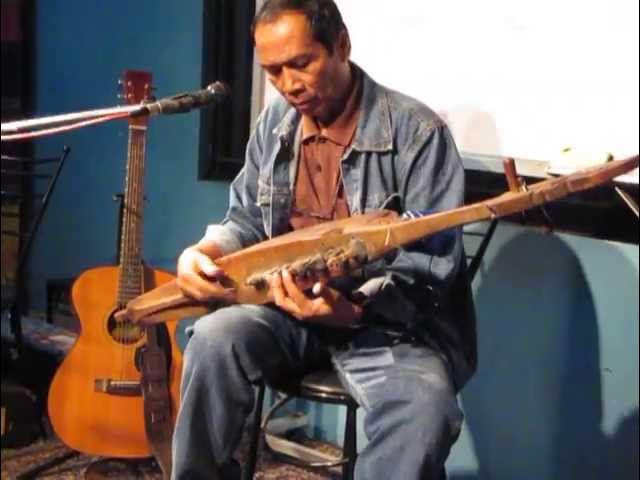
Samaon Sulaiman was one of the most extraordinary musical figures in Philippine history a Maguindanaon virtuoso whose mastery of the kutyapi, a traditional two-stringed plucked lute, was so profound and so rare that the Philippine government honored him with the nation’s highest recognition for traditional artists: the Gawad sa Manlilikha ng Bayan (GAMABA), or National Living Treasure award. In a world where ancient musical traditions are increasingly threatened by modernization and disinterest, Sulaiman dedicated his life to preserving, performing, and transmitting the musical soul of the Maguindanao people.
Profile Details
| Full Name | Samaon Sulaiman |
| Born | March 3, 1953 |
| Died | May 21, 2011 |
| Age at Death | 58 years old |
| Birthplace | Mamasapano, Maguindanao, Philippines |
| Nationality | Filipino |
| Ethnicity | Maguindanaon |
| Religion | Islam |
| Occupation | Musician, Kutyapi Master, Imam, Barber |
| Award | Gawad sa Manlilikha ng Bayan (GAMABA) National Living Treasure |
Early Life
Samaon Sulaiman was born on March 3, 1953, in Mamasapano, a municipality in the province of Maguindanao in the Bangsamoro Autonomous Region in Muslim Mindanao (BARMM), Philippines. He was a member of the Maguindanaon people one of the largest Filipino Islamic groups in the Philippines concentrated in the towns of Dinaig, Datu Piang, Maganoy, and Buluan in Maguindanao province.
The Maguindanaon are renowned throughout the Philippines and Southeast Asia for their extraordinary musical sophistication, particularly in the traditions of the kulintang (a gong-chime ensemble) and the kutyapi (a two-stringed plucked lute). Growing up in this musically rich environment, the young Samaon was immersed from childhood in a world of intricate melodies, complex rhythms, and the deeply poetic musical traditions of his people.
At approximately 13 years old, Samaon began learning to play the kutyapi from his uncle. The instrument was, and remains, one of the most technically demanding and difficult to master among all Filipino traditional instruments. Its two strings one providing a rhythmic drone, the other carrying melodies through movable frets allow the player to navigate two sets of pentatonic scales, one containing semitones and one without. The demands of the kutyapi require not only technical precision but a profound understanding of its expressive possibilities: its range of timbres, its subtle and variable tuning system, and its capacity for deeply poetic, meditative musical expression.
Education
Samaon Sulaiman’s formal education is not extensively documented in public records. His most important “education” was the deeply traditional master-apprentice transmission of musical knowledge learning directly from his uncle and from the living musical traditions of the Maguindanaon community. This form of intergenerational knowledge transfer is itself recognized as a vital cultural heritage practice, and Sulaiman both received it and perpetuated it throughout his life by teaching countless students.
In addition to his musical training, Sulaiman served as an imam at the Libutan mosque a role that required religious learning, leadership, and community responsibility. His dual life as musician and religious leader reflected the integrated nature of spiritual and artistic life within traditional Maguindanaon culture.
Career
By the time Samaon Sulaiman was 35 years old, he had already achieved recognition as the most accomplished kutyapi master and teacher in Libutan and other barangays of Maganoy town. His profound skill deeply influenced other acknowledged experts in the area, including Esmael Ahmad, Bitul Sulaiman, Nguda Latip, Ali Ahmad, and Tukal Nanalon the next generation of Maguindanaon musical masters who themselves became important custodians of the tradition.
Sulaiman’s mastery of the kutyapi was expressed through an extensive repertoire of musical forms and styles: the dinaladay, linapu, minuna, binalig, and many others each requiring refined technique, deep sensitivity, and an intimate understanding of the instrument’s expressive range. His performances were described by scholars and audiences alike as intimate, meditative, and almost mystical possessing a quiet, delicate power that could be both celebrative and profoundly still.
Beyond the kutyapi, Sulaiman was also proficient in other Maguindanaon instruments:
- Kulintang — the gong-chime ensemble instrument central to Maguindanaon musical identity
- Agong — a suspended bossed gong with a wide rim
- Gandingan — a bossed gong with a narrow rim
- Palendag — a lip-valley flute
- Tambul — a traditional drum
In recognition of his exceptional artistry and his unwavering commitment to preserving the kutyapi tradition at a time when the instrument had largely disappeared from many parts of Mindanao, Samaon Sulaiman was awarded the Gawad sa Manlilikha ng Bayan (GAMABA) — the Philippines’ National Living Treasure award, administered by the National Commission for Culture and the Arts (NCCA). This is the highest honor the Philippine state bestows on master folk and traditional artists whose skills represent a living cultural heritage of the Filipino people.
Sulaiman’s music reached international audiences through music festivals and scholarly documentation projects. His technique and emotional depth were praised by world music scholars as exemplary of Southeast Asian lute traditions. The NCCA supported his efforts to teach and demonstrate traditional arts through workshops and public demonstrations.
Alongside his musical life, Sulaiman was a respected member of his community as a barber and as an imam at the Libutan mosque roles that grounded him in the everyday life of his people even as his artistry elevated him to national and international renown.
Awards & Recognition
- Gawad sa Manlilikha ng Bayan (GAMABA) National Living Treasure award, Philippine government
- Posthumous recognition: Mamayog: The Music of Samaon Sulaiman (2012) a comprehensive NCCA-supported collection of audio recordings, over 300 pages of musical transcriptions, and scholarly analysis of his kutyapi compositions
Social Media
Samaon Sulaiman passed away in 2011 and did not have personal social media accounts. However, his music and legacy are preserved and celebrated online through the NCCA’s cultural education platforms, YouTube recordings of his performances, and the Samaon Art Exhibit website (kyandmalvar.wixsite.com/gamabasamaon), which documents his life and work. His music is also referenced in the Mamayog audio recordings available through academic and cultural archives.
Personal Life
Samaon Sulaiman lived a life of remarkable integration musician, imam, barber, husband, father, and community leader, all in one deeply rooted person. He was a devout Muslim whose religious life informed his artistic practice and his role as a community servant. He served as the imam at the Libutan mosque the spiritual leader responsible for guiding his community in prayer and religious observance.
He was widely beloved in his barangay not only for his musical gifts but for his humble, generous character and his commitment to passing on his knowledge to younger generations. He spent decades teaching students the art of kutyapi playing, ensuring that the tradition would not die with him.
Samaon Sulaiman died on May 21, 2011, in the Philippines, at the age of 58. His passing was mourned not only by his family and community but by the broader Philippine cultural and artistic world, which recognized in him the loss of an irreplaceable master of traditional music.
Net Worth
Samaon Sulaiman lived a modest life as a musician, imam, and barber in his community. His income was derived from his barbering work, his role as imam, and from cultural performance and workshop engagements supported by the NCCA. Specific financial information about his net worth is not publicly available. His wealth was measured in cultural capital the immense value of a living tradition preserved through decades of dedicated artistry and teaching.
Discography / Musical Legacy
- Mamayog: The Music of Samaon Sulaiman (2012, posthumous) NCCA-produced audio recordings, 300-page book with musical transcriptions and scholarly monograph on the Maguindanaon kutyapi
- Various recordings of kutyapi pieces including dinaladay, linapu, minuna, and binalig
FAQs About Samaon Sulaiman
Who is Samaon Sulaiman?
Samaon Sulaiman (March 3, 1953 – May 21, 2011) was a Filipino Maguindanaon musician, National Living Treasure (GAMABA awardee), and the foremost master of the kutyapi a traditional two-stringed plucked lute in the Philippines.
What is the kutyapi?
The kutyapi is a traditional two-stringed plucked lute found among various Filipino ethnic groups and Southeast Asian peoples. Among the Maguindanaon, it is one of the most technically demanding instruments, requiring mastery of complex pentatonic scales and a wide range of timbres and musical forms.
What is the GAMABA award?
The Gawad sa Manlilikha ng Bayan (GAMABA) or National Living Treasure award is the highest honor given by the Philippine government to master folk and traditional artists whose distinctive skills represent a living heritage of the Filipino people.
When did Samaon Sulaiman start learning the kutyapi?
He began learning the kutyapi from his uncle at approximately 13 years of age.
What is Mamayog?
Mamayog: The Music of Samaon Sulaiman is a posthumous 2012 NCCA tribute a collection of audio recordings, over 300 pages of musical transcriptions, and a scholarly monograph documenting Sulaiman’s kutyapi compositions and their significance.
Conclusion
Samaon Sulaiman was more than a musician he was a guardian of living cultural heritage, a bridge between the ancient musical traditions of the Maguindanao people and the generations who would inherit them. In a time of rapid cultural change and the erosion of indigenous art forms, his life’s work was an act of profound cultural patriotism ensuring that the intimate, meditative, almost mystical beauty of the Maguindanaon kutyapi would not be lost to time. The National Living Treasure award, the posthumous Mamayog recordings, and the students he mentored are his enduring legacy proof that one person’s commitment to an art form can preserve a people’s soul for future generations.