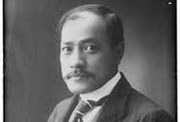
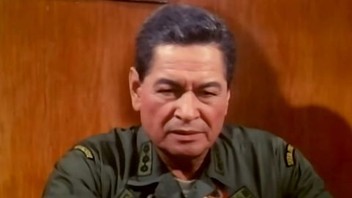
Rizal Alih is one of the most controversial figures in modern Philippine history a former police officer whose dramatic standoff at Camp Cawa-Cawa in Zamboanga City in January 1989 shocked the nation, resulted in the deaths of a two-star general and nearly two dozen others, and sparked years of fugitive life, imprisonment, and ultimately infamy.
His story is a complex blend of grievance, tragedy, and consequences that reverberated through Philippine law enforcement and society for decades.
Profile Details
| Full Name | Rizal Alih |
| Born | Approximately 1938 (age 77 at death) |
| Died | August 14, 2015 |
| Birthplace | Zamboanga City, Philippines |
| Nationality | Filipino |
| Occupation | Former Police Officer (Patrolman, Philippine Constabulary-Integrated National Police) |
| Religion | Islam |
| Known For | Leading the 1989 Camp Cawa-Cawa siege |
Early Life
Rizal Alih was born in approximately 1938 in the Zamboanga City area, in the Zamboanga Peninsula of Mindanao a region with a diverse population of Muslims, Christians, and indigenous peoples. He was a Tausug or Chavacano-heritage Muslim from the Zamboanga area, raised in a community with deep Islamic traditions.
Details about his childhood and early upbringing are not extensively documented in public records. What is known is that as a young man, he pursued a career in law enforcement, eventually joining the Philippine Constabulary-Integrated National Police (PC/INP) as a patrolman based in Zamboanga City. His career in the police force appeared stable until a series of events in the early 1980s drew him into the center of a major controversy.
Career
Rizal Alih served as a patrolman in the Philippine Constabulary-Integrated National Police in Zamboanga City. His name first entered the public consciousness in connection with the assassination of Zamboanga City Mayor Cesar Climaco on November 14, 1984 one of the most shocking political murders in the city’s history. Alih and several of his men were detained and investigated for alleged involvement in the mayor’s killing.
While awaiting resolution of the case, Alih and his group were held at the Camp Cawa-Cawa detention facility in Zamboanga City. By January 1989, word came that they were to be transferred to Manila for further detention. Alih vigorously protested the transfer, setting off a chain of events that would end in catastrophe.
On January 3, 1989, Brigadier General Eduardo Batalla then the Philippine Constabulary chief in Western Mindanao summoned Alih and his men to his office at Camp Cawa-Cawa to discuss the impending transfer to Manila. What began as a meeting quickly devolved into a fierce shouting match. The confrontation escalated dramatically, and Alih and his armed group took General Batalla, his aide Colonel Romeo Abendan, and several other military men hostage inside the camp.
The standoff lasted three days, from January 3 to January 5, 1989. After all negotiations failed including calls by then-Armed Forces Chief Renato de Villa urging Alih to surrender and release the hostages a military assault was ordered. The decision was made to bomb Camp Cawa-Cawa, resulting in the deaths of General Batalla, Colonel Abendan, and at least 18 other PC/INP personnel. It was a devastating loss for the Philippine military establishment.
In the chaos that followed the assault, Alih managed to escape unhurt. He fled the burning camp, hijacked a civilian vehicle at gunpoint, and eventually rented a motorboat for approximately ₱20,000 to escape to Sabah, Malaysia. He assumed a new identity there and evaded capture for years.
In 1994, Malaysian authorities from the 69 Commando of the Royal Malaysia Police arrested Alih on July 21 in Sandakan, Sabah, following a raid on a criminal den in Jampiras where he was charged with illegal possession of firearms. He was later convicted and sentenced to 12 years in prison in Malaysia. After serving his sentence, he was extradited back to the Philippines in 2006 to face charges related to the Camp Cawa-Cawa siege.
Back in the Philippines, Alih was detained at the PNP Custodial Center in Camp Crame, Quezon City, where he remained until his death. In a 2006 interview, he expressed regret over the incident, saying the deaths of General Batalla and others were accidental and that the siege originated from a personal dispute over his transfer not from premeditated intent to kill.
A libel case he filed against film director Carlo J. Caparas and his wife Donna Villa over the 1991 film Rizal Alih: Zamboanga Massacre — was dismissed by the Quezon City prosecutor’s office.
In Popular Culture
The dramatic story of the Camp Cawa-Cawa siege inspired two Filipino films:
- Ang Manananggol ni Ruben (1963) an earlier film referencing another Ruben Ablaza case; not the same event
- Rizal Alih: Zamboanga Massacre (1991) directed by Carlo J. Caparas; starring Ramon Revilla Sr. as Rizal Alih, Eddie Garcia as General Batalla, and Vilma Santos as Alih’s wife
Personal Life
Rizal Alih was a Muslim from Zamboanga City, and his religious identity was central to his community ties. He was buried according to Islamic rites within 24 hours of his death, with some 400 people attending the burial ceremony. His remains were transported back to Zamboanga City, where he was interred alongside his brother at the public Muslim cemetery in Barangay Caragasan.
He had a niece named Shiela Ria Tan (also referred to as Khan Johan on social media), who was among the first to announce his death and who waived the requirement for an autopsy. His family maintained close ties in Zamboanga City despite the decades of controversy surrounding his life.
Death
Rizal Alih died on August 14, 2015, inside the PNP Custodial Center at Camp Crame, Quezon City. He was reported to be approximately 77 years old at the time of his death. He complained of chest pains before being brought to the camp hospital, where he was pronounced dead on arrival. His niece stated that his passing was peaceful and painless, and the family was relieved that he died without suffering.
Net Worth
No reliable information is available regarding Rizal Alih’s net worth. He spent the last years of his life in state detention with minimal personal resources.
FAQs About Rizal Alih
Who is Rizal Alih?
Rizal Alih was a former Filipino police officer who led the 1989 Camp Cawa-Cawa siege in Zamboanga City, which resulted in the deaths of Brigadier General Eduardo Batalla and nearly 20 others.
What happened during the Camp Cawa-Cawa siege?
On January 3–5, 1989, Alih and his men took General Batalla and others hostage inside Camp Cawa-Cawa following a dispute over his pending transfer to Manila. The military ordered a bombing of the camp that killed Batalla, his aide, and 18 others. Alih escaped and fled to Malaysia.
Was Rizal Alih ever captured?
Yes. He was arrested in Sabah, Malaysia in 1994, served 12 years in a Malaysian prison, and was extradited to the Philippines in 2006. He remained detained at Camp Crame until his death in 2015.
Did Rizal Alih express remorse?
Yes. In a 2006 interview, he said he regretted the incident and claimed the deaths were accidental, arising from a personal confrontation rather than premeditated murder.
When did Rizal Alih die?
He died on August 14, 2015, at the PNP Custodial Center in Camp Crame, Quezon City, of apparent heart failure. He was approximately 77 years old.
Conclusion
Rizal Alih’s life story is a cautionary tale about the consequences of conflict, grievance, and the tragic intersection of personal rage and institutional authority. His three-day siege at Camp Cawa-Cawa remains one of the most dramatic and deadly incidents in the history of the Philippine National Police. While he expressed regret in his later years, the lives lost in January 1989 cast a long shadow over his legacy. His story was immortalized in film and continues to be discussed as one of the darkest chapters in Philippine law enforcement history.