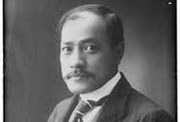
Rafael Palma y Velásquez was one of the most distinguished Filipinos of the early 20th century a statesman, writer, journalist, educator, and devoted Freemason who left an indelible mark on Philippine history.
From co-founding revolutionary newspapers to serving as the fourth President of the University of the Philippines, Palma’s contributions to his nation’s intellectual and political landscape remain deeply admired to this day.
Profile Details
| Full Name | Rafael Palma y Velásquez |
| Born | October 24, 1874 |
| Died | May 24, 1939 |
| Age at Death | 64 years old |
| Birthplace | Tondo, Manila, Philippines |
| Nationality | Filipino |
| Occupation | Politician, Educator, Writer, Journalist, Freemason |
| Party | Nacionalista Party |
| Spouse | Carolina Ocampo |
| Siblings | José Palma (younger brother, author of “Filipinas” poem) |
| Education | Ateneo de Manila University; University of Santo Tomas (Law) |
| Net Worth | Not available |
Early Life
Rafael Palma was born on October 24, 1874, in the district of Tondo, Manila, in what was then the Captaincy General of the Philippines under Spanish colonial rule. He was the son of Don Hermógenes Palma, a clerk at the Intendencia Office (the colonial treasury), and Hilaria Velásquez. Growing up in Manila during a time of profound political tension and nationalist awakening, Rafael was exposed from a young age to the intellectual currents that would later define his career.
His younger brother, José Palma, went on to become a celebrated soldier-poet and the author of the Spanish poem “Filipinas,” which along with its subsequent translations was later used as the Philippine National Anthem. The Palma household, therefore, was a cradle of patriotism and literary sensibility, shaping Rafael’s character and worldview profoundly.
As a child, Rafael attended public schools in Tondo for his elementary and secondary education. He was a diligent and intellectually curious student who showed early aptitude for writing, debate, and public affairs. His formative years coincided with the Philippine propaganda movement against Spanish colonial rule, an era that ignited the revolutionary spirit in many young Filipinos of his generation.
Education
For his collegiate education, Rafael Palma enrolled at the prestigious Ateneo de Manila University. He later pursued a law degree at the University of Santo Tomas (UST), one of the oldest universities in Asia, where he honed his legal mind and rhetorical skills. His education at two of the Philippines’ most respected institutions laid the foundation for a multifaceted career in law, journalism, politics, and academia.
Career
Rafael Palma’s career was remarkable in its breadth and impact. As a young man during the Philippine Revolution, he became deeply involved in the propaganda campaign against Spanish colonialism. He co-founded the revolutionary newspaper La Independencia alongside General Antonio Luna one of the most prominent nationalist publications of the era, which boldly challenged Spanish authority and advocated for Filipino independence.
Beyond La Independencia, Palma contributed to other newspapers including La Patria. He also founded El Nuevo Dia, recognized as the first daily newspaper in Cebu, demonstrating his commitment to expanding the press beyond Manila. His journalism was a form of patriotic activism, using the written word as a weapon against colonial oppression.
In 1907, after a brief residence in Cavite, Palma was elected to represent Cavite in the First Philippine Assembly, marking his formal entry into politics. He was subsequently appointed as a Member of the Second Philippine Commission from 1908 to 1916, a body that held significant legislative authority under American colonial rule. In 1916, he was elected Senator under the Nacionalista Party, representing the 4th Senatorial District a seat he won again in the 1919 senatorial polls. He also served as Secretary of the Interior from January 1917 to July 1920, appointed by Governor-General Francis Burton Harrison.
Perhaps his most celebrated role came in academia. In 1925, Palma was appointed the fourth President of the University of the Philippines, a position he held until 1933. Under his leadership, UP was strengthened as a center of Filipino intellectual life, and his legacy at the university endures to this day through the iconic Palma Hall at the UP Diliman campus home of the College of Social Sciences and Philosophy.
As a writer, Palma produced several notable books. His biography of Filipino national hero José Rizal, translated into English as The Pride of the Malay Race by Justice Román Ozaeta, is considered one of the most authoritative accounts of Rizal’s life. He also wrote The Woman and the Right to Vote (an advocacy for women’s suffrage) and The New Mentality (1929).
Palma was also a prominent Freemason in the Philippines, which was consistent with the Masonic affiliations of many Filipino reformists and revolutionaries of the late 19th and early 20th centuries.
Awards & Nominations
While formal awards in the modern sense were not as institutionalized during Palma’s era, his honors were expressed through public recognition and institutional naming:
- Palma Hall at the University of the Philippines Diliman was named in his honor
- Multiple schools across the Philippines bear his name, including Rafael Palma Elementary School in Makati and Manila
- Barangay Rafael Palma in Diffun, Quirino, is named after him
- University of Bohol was originally named Rafael Palma College in 1946 before its renaming
Social Media
As Rafael Palma lived from 1874 to 1939, he predates the era of social media entirely. He has no personal social media accounts. However, his legacy is discussed and celebrated across various online platforms, academic pages, and historical archives maintained by the University of the Philippines and the National Historical Commission of the Philippines.
Personal Life
Rafael Palma was married to Carolina Ocampo, and together they built a family in Manila. He was a man of deep conviction both in his nationalist politics and his Masonic principles of brotherhood, equality, and enlightenment. His younger brother José Palma’s literary fame added to the cultural prestige of the Palma family name.
Palma was known as a gifted orator, earning recognition as one of the finest public speakers of his era. He was a “Rizalian” a devoted admirer and scholar of José Rizal and dedicated significant intellectual energy to understanding and popularizing Rizal’s life and thought. He died on May 24, 1939, in Manila, at the age of 64, leaving behind a towering legacy in Philippine education, journalism, and public service.
Net Worth
As a public servant, journalist, and academic from the early 20th century, specific financial records regarding Rafael Palma’s net worth are not available. His wealth was measured not in monetary terms but in intellectual legacy his writings, his institutional contributions, and his patriotic service to the Filipino people.
Works / Bibliography
- La Independencia (co-founded newspaper, 1898)
- El Nuevo Dia (founded Cebu’s first daily newspaper)
- The Pride of the Malay Race (biography of José Rizal; translated by Justice Román Ozaeta)
- The Woman and the Right to Vote
- The New Mentality (1929)
FAQs About Rafael Palma
Who is Rafael Palma?
Rafael Palma y Velásquez (1874–1939) was a Filipino politician, writer, educator, journalist, and Freemason. He served as the 4th President of the University of the Philippines and as a Senator under the Nacionalista Party.
What is Rafael Palma known for?
He is best known for co-founding the revolutionary newspaper La Independencia with General Antonio Luna, his presidency of the University of the Philippines, and his biography of José Rizal titled The Pride of the Malay Race.
Where was Rafael Palma born?
He was born on October 24, 1874, in Tondo, Manila, Philippines.
Who was Rafael Palma’s brother?
His younger brother was José Palma, the poet who wrote “Filipinas,” the poem that became the basis of the Philippine National Anthem.
When did Rafael Palma die?
Rafael Palma died on May 24, 1939, in Manila, at the age of 64.
Conclusion
Rafael Palma y Velásquez was a towering figure in Philippine history a man who wielded the pen, the podium, and the political seat with equal effectiveness. From his revolutionary journalism to his leadership of the country’s premier state university, Palma devoted his life to the twin causes of Filipino freedom and Filipino enlightenment. His legacy lives on in the institutions that bear his name, the students who study in Palma Hall, and the ongoing appreciation for his biography of José Rizal. He is, without doubt, one of the great minds and patriots that the Philippines has ever produced.