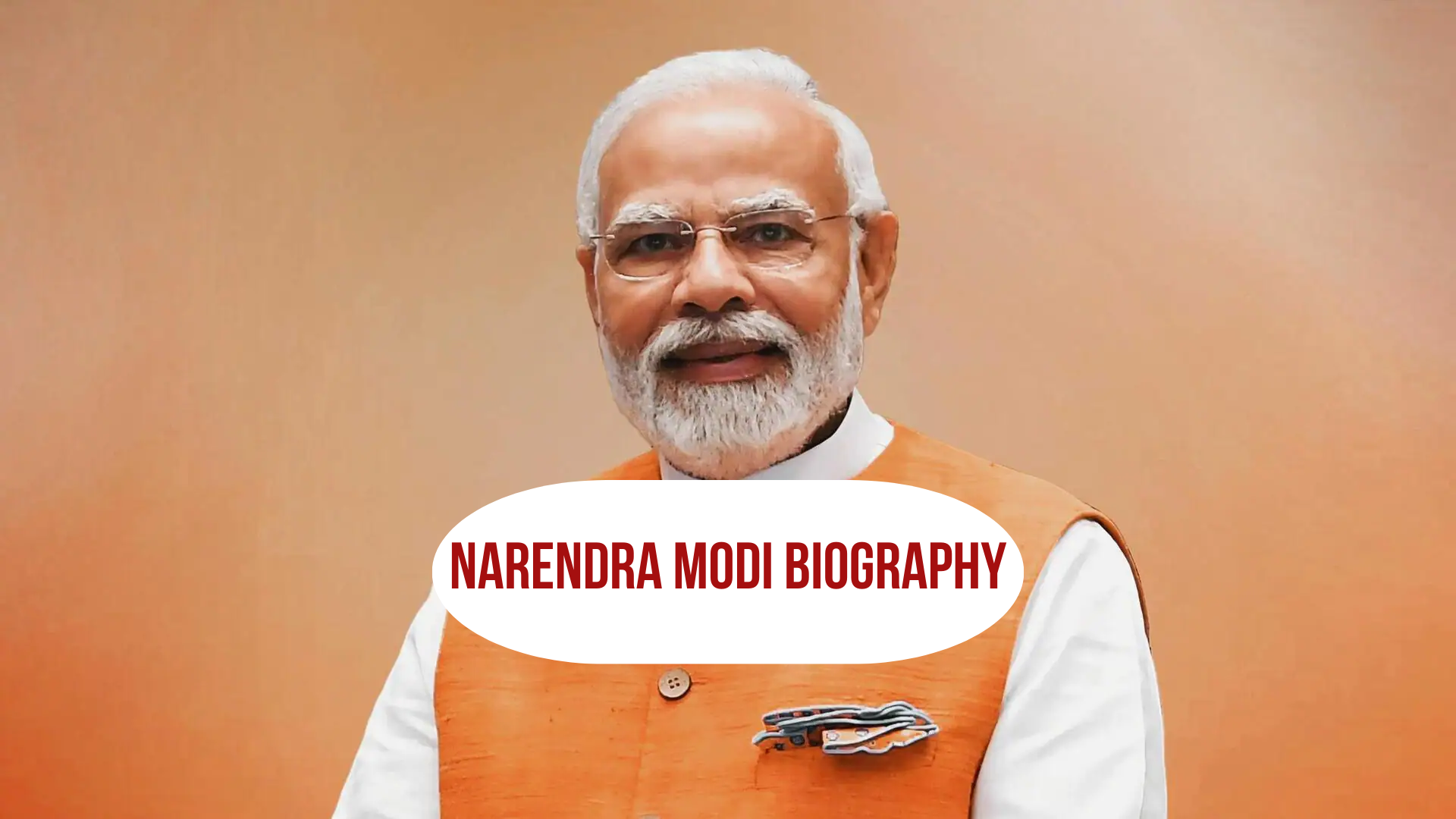
Narendra Modi is one of the most influential political leaders in modern Indian history. Serving as the 14th Prime Minister of India since 2014, Modi has significantly reshaped India’s domestic policies and global image.
Known for his charismatic leadership, powerful speeches, and bold reforms, he remains a dominant figure in global politics.
This comprehensive Narendra Modi biography explores his early life, political career, achievements, controversies, leadership style, and more.
Quick Facts
| Full Name | Narendra Damodardas Modi |
| Born | 17 September 1950 |
| Age | 75 years (as of 2025) |
| Birthplace | Vadnagar, Gujarat, India |
| Nationality | Indian |
| Occupation | Politician |
| Religion | Hinduism |
| Parents | Damodardas Mulchand Modi (Father), Heeraben Modi (Mother) |
| Spouse | Jashodaben Modi |
| Net Worth | Approximately ₹3 crore+ (as per declared assets) |
Early Life
Narendra Damodardas Modi was born on September 17, 1950, in Vadnagar, a small town in Mehsana district of Gujarat, India. He was born into a modest family belonging to the Ghanchi community, categorized as an Other Backward Class (OBC) in India.
His father, Damodardas Mulchand Modi, ran a tea stall, and young Narendra is said to have helped his father at the railway station. His humble beginnings have often been highlighted in his political narrative as a symbol of determination and resilience.
Modi completed his schooling in Vadnagar and later earned a Bachelor’s degree in Political Science from the University of Delhi. He also obtained a Master’s degree in Political Science from Gujarat University.
Association with RSS and Early Political Journey
Narendra Modi’s political journey began with the Rashtriya Swayamsevak Sangh (RSS), a Hindu nationalist organization. He joined the RSS at a young age and worked as a pracharak (campaigner). The RSS played a pivotal role in shaping his ideological foundation and leadership skills.
In 1987, Modi officially joined the Bharatiya Janata Party (BJP). His organizational skills quickly gained attention, and he was assigned important responsibilities within the party structure.
Rise Within the BJP
Modi’s rise within the BJP was marked by strategic planning and strong grassroots engagement. He played a key role in strengthening the party’s presence in Gujarat during the 1990s.
In 2001, he was appointed as the Chief Minister of Gujarat. His tenure as Chief Minister lasted from 2001 to 2014, making him one of the longest-serving leaders in the state’s history.
Chief Minister of Gujarat (2001–2014)
As Chief Minister, Narendra Modi focused on economic development, infrastructure growth, and industrial expansion. Gujarat experienced rapid industrialization under his leadership.
Key highlights of his tenure include:
- Development of road and port infrastructure
- Expansion of power supply
- Encouragement of foreign investments
- Launch of Vibrant Gujarat Summit
However, his tenure was also marked by controversy, particularly the 2002 Gujarat riots, which drew national and international criticism.
Despite criticism, Modi maintained strong political support within Gujarat and won multiple assembly elections.
Becoming Prime Minister of India
In 2014, Narendra Modi led the BJP to a historic victory in the general elections. The BJP secured a majority in the Lok Sabha, making him the Prime Minister of India.
In 2019, he was re-elected with an even larger mandate, reinforcing his popularity among Indian voters.
Major Policies and Reforms as Prime Minister
1. Demonetization (2016)
One of the most controversial decisions was the demonetization of ₹500 and ₹1000 currency notes aimed at curbing black money and corruption.
2. Goods and Services Tax (GST)
The introduction of GST unified India’s complex tax structure into a single taxation system.
3. Make in India
This initiative aimed to promote manufacturing and attract foreign investments.
4. Digital India
The Digital India campaign focused on increasing internet connectivity and digital services across the country.
5. Swachh Bharat Abhiyan
Launched to improve sanitation and cleanliness across India.
6. Abrogation of Article 370
In 2019, the special status of Jammu and Kashmir under Article 370 was revoked.
Foreign Policy and Global Influence
Narendra Modi has emphasized strengthening India’s global partnerships. He has built strategic relationships with countries like the United States, Japan, Australia, and European nations.
His diplomacy focuses on:
- Strengthening economic ties
- Promoting India as a global investment destination
- Expanding defense cooperation
India’s participation in global platforms such as the G20 and Quad has increased under his leadership.
Leadership Style
Narendra Modi is known for:
- Strong central leadership
- Effective communication skills
- Direct engagement with citizens via radio and social media
- Emphasis on nationalism and development
His monthly radio program “Mann Ki Baat” connects directly with millions of citizens.
Awards and Recognition
Modi has received numerous international honors, including:
- United Nations Champions of the Earth Award
- Various civilian awards from foreign governments
He is also one of the most followed political leaders on social media globally.
Personal Life
Narendra Modi married Jashodaben Modi at a young age, but they have lived separately for most of their lives. He is known for maintaining a disciplined lifestyle and follows a vegetarian diet.
He practices yoga regularly and promotes International Yoga Day globally.
Net Worth
Narendra Modi’s declared assets are modest compared to many global leaders. His wealth primarily includes bank deposits and minimal property holdings.
Controversies and Criticism
Throughout his political career, Modi has faced criticism regarding:
- 2002 Gujarat riots
- Handling of demonetization
- Citizenship Amendment Act (CAA)
- Farmers’ protests
Despite controversies, he continues to maintain significant public support.
Narendra Modi’s Vision for India
Modi’s vision focuses on:
- Economic growth
- Technological advancement
- Self-reliant India (Atmanirbhar Bharat)
- Strong national security
His leadership continues to shape India’s political and economic landscape.
Frequently Asked Questions (FAQs)
1. When was Narendra Modi born?
Narendra Modi was born on September 17, 1950.
2. What is Narendra Modi’s educational qualification?
He holds a Master’s degree in Political Science.
3. When did Narendra Modi become Prime Minister?
He became Prime Minister of India in 2014.
4. How long was Modi Chief Minister of Gujarat?
He served from 2001 to 2014.
5. What is Narendra Modi known for?
He is known for economic reforms, strong leadership, and global diplomacy.
Conclusion
Narendra Modi’s biography is a remarkable story of determination, political strategy, and transformative leadership. From helping at a tea stall in Vadnagar to leading the world’s largest democracy, his journey reflects resilience and ambition.
Whether admired or criticized, Narendra Modi remains a defining figure in 21st-century global politics. His policies, reforms, and leadership style continue to shape India’s future trajectory.